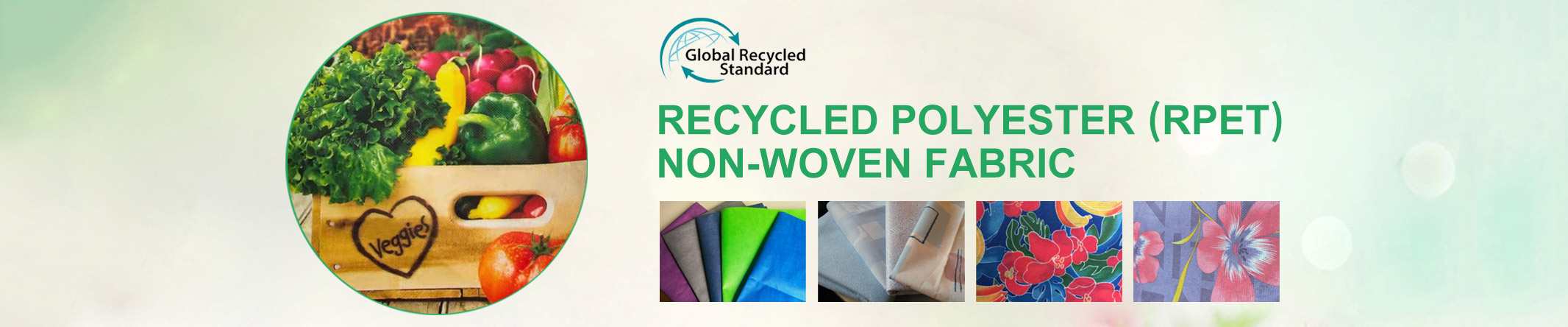
A moderate yet steadfast green transformation is taking place in the consumer market and global supply chain. In the past, fabric selection primarily focused on texture, cost, and adaptability. Nowadays, sustainable attributes, material traceability, and brand social responsibility have become crucial considerations for major brands in their material selection. Under this trend, recycled PET fabric has gradually evolved from an alternative material to a mainstream choice for brands across various sectors, including home furnishing, soft furnishing, apparel, packaging, and auto parts. An increasing number of companies are actively replacing traditional fabrics and integrating recycled PET fabric into their product and supply chain systems. This shift is not a mere trend-following, but rather a result of the combined effects of industry development, market demand, and brand upgrading.
1. Align with the global trend of sustainable development and meet the requirements of green supply chain
In the current global textile and light industry, low-carbon circular development has become the mainstream trend, and various green supply chain standards continue to be implemented. Traditional petrochemical-based fabrics rely on the consumption of virgin raw materials, with a relatively singular resource utilization model. However, Recycled PET fabrics, based on recycled polyester raw materials, are produced through a resource recycling and reprocessing model, effectively realizing resource recycling, reducing raw material waste, and aligning with the development concept of circular economy.
Numerous brands both domestically and internationally have established their own green supply chain systems, setting clear requirements for the fabric materials, production processes, and environmental qualifications of their cooperative suppliers. Recycled PET fabrics can be accompanied by a standardized recycling certification system, enabling traceability of raw materials and verifiability of processes. This makes it easy to adapt to international and domestic green procurement standards, helping brands smoothly connect with high-end supply chains and overseas trade markets, and reducing compliance risks in material selection.
2. The material has stable performance and is fully compatible with the production of various product categories
Whether it's for making non-woven fabrics, decorative fabrics, textile accessories, or packaging fabrics, Recycled PET fabrics can be adapted to various deep-processing techniques such as cutting, laminating, printing, and embossing, meeting the production needs of different product categories. In daily use scenarios, the fabrics exhibit excellent durability, anti-aging properties, and flatness, meeting the standards for use in multiple scenarios such as civilian, commercial, and industrial accessories. They can fully replace traditional virgin fabrics, achieving a dual adaptation of performance and practicality.
3. Responding to consumption upgrading and aligning with the public's green consumption concept
The brand's adoption of Recycled PET fabric is a direct manifestation of implementing sustainable concepts into its products. The production process of this fabric strictly adheres to technological standards, with no unnecessary harmful additives. The material is mild and safe, suitable for home and intimate use scenarios. By empowering its products with green materials, the brand not only provides consumers with a more reassuring experience but also aligns with the current mainstream aesthetic of green consumption, thereby bridging the gap with end users and enhancing product market recognition.
4. Empower brand value and build differentiated market competitiveness
Choosing recycled PET fabric is a direct way for brands to fulfill their social responsibilities and convey their low-carbon philosophy. Compared to traditional material selection brands, brands that focus on renewable and eco-friendly materials can establish a higher-quality and more empathetic corporate image, enhancing brand tone and industry reputation. At the same time, a comprehensive green product system can also help brands gain advantages in industry upgrades and market selection, adapting to various cooperation scenarios such as high-end channels, brand collaborations, and public welfare marketing, empowering the brand for long-term development.
5. Continuously mature technology, suitable for large-scale commercial applications
The mature production process enables Recycled PET fabric to be suitable for large-scale production, with more stable and controllable quality. It can continuously provide stable material supply for brands, fully meeting the needs of commercialized and normalized product iteration. This is also an important reason why many brands dare to fully replace and prefer this material.
 QR Code
 Wechat
Copyright:Shantou Teamway Nonwoven Co., Ltd Technical Support:11400.CC
粤ICP备2025374784号


+86-186-8801-4401